

Kenya’s dairy industry is one of the country’s fastest-growing agricultural sectors, supplying millions of litres of milk every day to households, processors, hotels, schools, and manufacturers. However, producing quality milk is only half the journey—the real challenge is keeping it fresh after milking.
Without proper cooling, milk begins to deteriorate almost immediately. Harmful bacteria multiply rapidly, quality declines, and farmers risk losing income due to spoilage or rejected deliveries.
This is where bulk cooling tanks become an essential investment.
Whether you are a dairy farmer, milk collection centre, cooperative society, processor, or investor planning to venture into dairy processing, choosing the right bulk cooling tank can significantly improve product quality, profitability, and business growth.
In this comprehensive guide, we’ll cover:
- What a bulk cooling tank is
- How it works
- Why it is essential for dairy businesses
- Different capacities available
- Features to look for before buying
- Estimated prices in Kenya
- Common buying mistakes
- Why working with a trusted supplier matters
What Is a Bulk Cooling Tank?
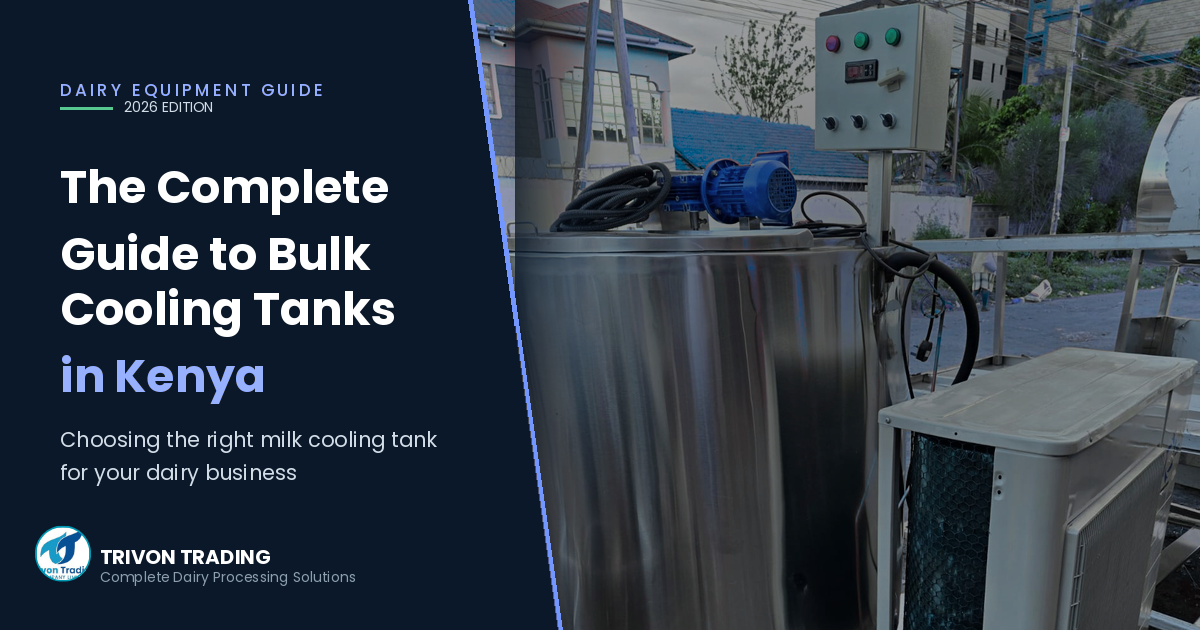
A bulk cooling tank, also known as a bulk milk cooler, is a stainless-steel insulated tank designed to cool freshly collected milk rapidly and maintain it at a safe storage temperature until transportation or processing.
Its main purpose is to:
- Rapidly reduce milk temperature
- Slow bacterial growth
- Preserve freshness
- Maintain milk quality
- Extend storage time
Modern cooling tanks automatically maintain milk between 2°C and 4°C, the recommended temperature range for safe milk storage.
Why Bulk Cooling Tanks Are Important
Fresh milk is highly perishable.
Immediately after milking, bacteria begin multiplying if the milk is not cooled quickly.
Without proper cooling, farmers may experience:
- Milk spoilage
- Reduced shelf life
- Lower selling prices
- Rejected milk deliveries
- Financial losses
A bulk cooling tank protects your investment by preserving milk quality from the moment it is collected.
Who Needs a Bulk Cooling Tank?
Bulk cooling tanks are ideal for:
Dairy Farmers
Farmers producing moderate to large quantities of milk can safely store milk before delivery.
Milk Collection Centres
Collection centres receive milk from multiple farmers throughout the day.
Cooling tanks maintain consistent quality before transportation.
Dairy Cooperatives
Cooperatives use cooling tanks to consolidate milk from members while maintaining freshness.
Milk Processing Plants
Processors require chilled milk before pasteurization and packaging.
Yogurt and Dairy Product Manufacturers
Milk quality directly affects:
- Yogurt
- Cheese
- Butter
- Cream
- Ice cream
Maintaining low temperatures improves final product quality.
How Does a Bulk Cooling Tank Work?
The process is simple but highly efficient.
Step 1: Milk Collection
Fresh milk enters the tank immediately after milking.
Step 2: Rapid Cooling
The refrigeration system quickly lowers milk temperature.
Step 3: Agitation
An internal agitator gently stirs the milk to ensure even cooling and prevent cream separation.
Step 4: Temperature Maintenance
The tank automatically maintains the desired temperature until milk is transported or processed.
Benefits of Using a Bulk Cooling Tank
Investing in a quality cooling tank offers numerous advantages.
Improved Milk Quality
Rapid cooling preserves freshness and reduces bacterial growth.
Reduced Spoilage
Proper cooling significantly lowers milk losses.
Higher Selling Prices
Processors often pay better prices for high-quality chilled milk.
Increased Storage Capacity
Cooling tanks allow businesses to store larger quantities before transportation.
Compliance with Food Safety Standards
Maintaining correct storage temperatures supports food safety and dairy industry best practices.
Types of Bulk Cooling Tanks
Different businesses require different cooling capacities.
Small Bulk Cooling Tanks
Suitable for:
Typical capacities:
- 100 litres
- 200 litres
- 300 litres
- 500 litres
Medium Cooling Tanks
Ideal for:
- Growing farms
- Collection centres
Typical capacities:
- 1,000 litres
- 2,000 litres
- 3,000 litres
Large Industrial Cooling Tanks
Designed for:
- Processing plants
- Dairy cooperatives
- Commercial milk processors
Capacities may exceed:
- 5,000 litres
- 10,000 litres
- 20,000 litres
Features to Consider Before Buying
Choosing the right cooling tank requires careful evaluation.
1. Capacity
Estimate both your current production and future growth.
Buying a slightly larger tank often provides better long-term value.
2. Food-Grade Stainless Steel
Choose tanks manufactured using high-quality stainless steel because it is:
- Hygienic
- Rust-resistant
- Easy to clean
- Durable
3. Efficient Cooling System
A reliable compressor ensures rapid cooling and consistent temperatures.
4. High-Quality Insulation
Good insulation helps maintain temperature while reducing electricity consumption.
5. Automatic Temperature Control
Digital controls improve consistency and simplify operation.
6. Agitation System
A properly designed agitator keeps milk evenly cooled without damaging its quality.
Where Can You Buy Bulk Cooling Tanks in Kenya?
When investing in dairy equipment, quality, technical support, and after-sales service are just as important as the purchase price.
One trusted supplier is Trivon Trading.
The company supplies:
- Bulk Milk Cooling Tanks
- Milk Chillers
- Batch Pasteurizer Tanks
- Stainless Steel Processing Tanks
- Dairy Processing Equipment
- Food-Grade Fabrication Solutions
Their systems are designed to meet the needs of:
- Dairy farmers
- Milk collection centres
- Cooperatives
- Dairy processors
Estimated Bulk Cooling Tank Prices in Kenya (2026)
Pricing depends on:
- Capacity
- Cooling technology
- Stainless steel quality
- Automation features
- Custom fabrication
Estimated Price Guide
| Capacity | Estimated Price (KES) |
|---|---|
| 100–300 Litres | 120,000 – 350,000 |
| 500–1,000 Litres | 400,000 – 900,000 |
| 2,000–5,000 Litres | 1M – 3M |
| Industrial Systems | From 3M+ |
Request a customized quotation to match your production requirements.
Common Mistakes Buyers Make
Avoid these costly mistakes:
Buying Based on Price Alone
Cheap tanks often have poor insulation, lower-grade materials, and unreliable cooling systems.
Choosing the Wrong Capacity
An undersized tank limits growth, while an oversized one may increase unnecessary costs.
Ignoring After-Sales Support
Cooling systems require maintenance, servicing, and spare parts.
Choose a supplier that provides ongoing technical assistance.
Poor Installation
Improper installation can reduce cooling efficiency and shorten equipment lifespan.
Professional installation is recommended.
Maintenance Tips
To maximize the lifespan of your bulk cooling tank:
✔ Clean the tank after every use
✔ Inspect refrigeration components regularly
✔ Monitor temperature readings
✔ Service compressors as recommended
✔ Check agitators and seals
Preventive maintenance improves efficiency and reduces repair costs.
Why Businesses Choose Trivon Trading
Businesses across Kenya trust Trivon Trading because the company offers more than equipment—it provides complete dairy processing solutions.
Their product range includes:
- Bulk Milk Cooling Tanks
- Batch Pasteurizers
- Milk Chillers
- Stainless Steel Storage Tanks
- Dairy Processing Equipment
- Water Treatment Systems
Customers also benefit from:
✔ Professional consultation
✔ Equipment sizing advice
✔ Installation support
✔ After-sales service
✔ Spare parts availability
Whether you’re starting a small dairy farm or expanding a commercial processing plant, having the right equipment and support can make a significant difference.
Final Thoughts
A bulk cooling tank is one of the most valuable investments you can make in a dairy business. It protects milk quality, reduces spoilage, improves profitability, and helps meet the standards expected by processors and consumers.
The right tank should match your production needs today while allowing room for future growth.
If you’re planning to purchase a bulk cooling tank in Kenya, work with experienced suppliers like Trivon Trading, who can help you choose the right capacity, install the system correctly, and provide ongoing technical support.
Investing in reliable cooling equipment today is an investment in the long-term success of your dairy business.


