

Introduction
If you’re setting up or scaling a water vending business in Kenya, you’ve probably come across automatic filling and capping machines online and wondered: do I actually need one, or can I get by with manual filling for now?
It’s a fair question — and an important one, because getting it wrong in either direction costs you money. Buy too much machine too soon, and you’ve tied up capital you needed elsewhere. Wait too long, and you’re capping bottles by hand at 2am while your competitor down the road is filling 500 bottles an hour.
At Trivon Trading, we’ve helped hundreds of entrepreneurs set up water vending operations across Kenya — from single-table roadside setups to full bottling lines. This guide gives you an honest answer based on what actually works at each stage of the business, not just a sales pitch.
What Is an Automatic Filling and Capping Machine?
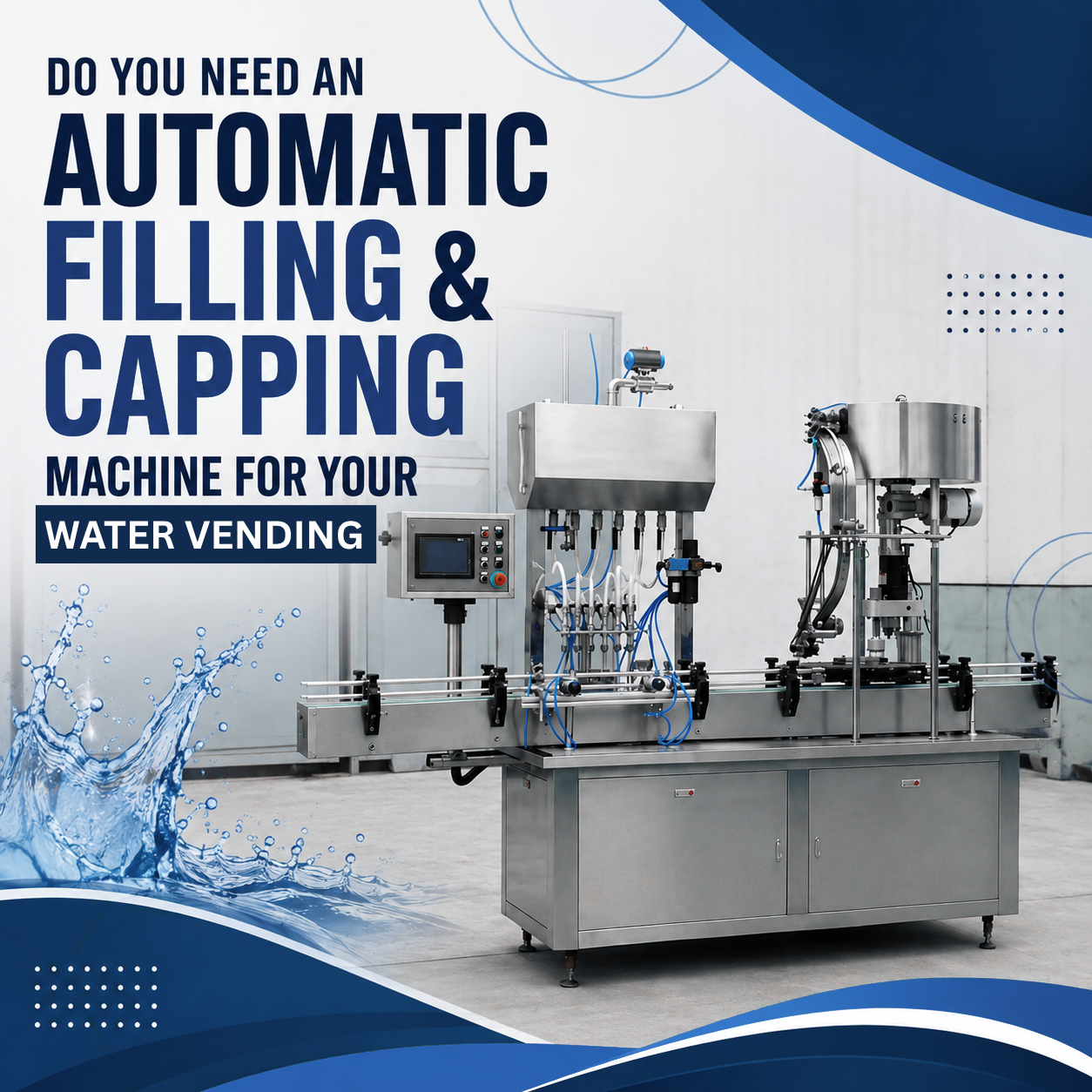
An automatic filling and capping machine is equipment that fills bottles or containers with water (or other liquids) to a precise level and then seals them with a cap — all with minimal manual intervention. Depending on the model, it can handle anywhere from a few dozen to several thousand bottles per hour.
Most systems fall into three categories:
- Manual filling stations – You control the flow with a tap or lever; capping is done by hand.
- Semi-automatic machines – The machine fills to a set level automatically, but you still load and cap bottles manually.
- Fully automatic filling and capping lines – Bottles are filled, capped, and sometimes labeled with almost no manual handling.
Do You Actually Need One? It Depends on Your Stage
If You’re Just Starting Out (Small Scale)
If you’re running a simple setup — a reverse osmosis machine, a packing table, and a bottle rinser — you likely don’t need an automatic filling and capping machine yet. Here’s why:
- Lower volume doesn’t justify the cost. If you’re filling under 200–300 bottles a day, manual filling with a simple tap and hand-capping is manageable and far cheaper.
- Capital is better spent elsewhere. For a new entrepreneur, that extra investment is often better used on marketing, a second storage tank, or working capital to survive the first few months.
- Flexibility matters early on. Manual setups let you adjust bottle sizes and packaging on the fly as you learn what your customers actually want.
If You’re Scaling Up (Medium Volume)
Once you’re filling 500+ bottles a day, or supplying shops, offices, or events in bulk, the equation changes. This is usually the point where entrepreneurs start asking about semi-automatic or automatic equipment.
Signs it’s time to consider upgrading:
- You or your staff are spending hours daily just filling and capping
- Inconsistent fill levels or loose caps are causing customer complaints or leaks
- You’re turning away bulk orders because you can’t fill fast enough
- Labor costs for manual filling are creeping up as you add staff
If You’re Running a Bottling Plant or Large Distribution Business
At this level, an automatic filling and capping machine isn’t optional — it’s essential. Manual filling simply cannot match the speed, consistency, or hygiene standards required for large-scale bottled water distribution, especially if you’re supplying retailers or aiming for a recognized brand.
Pros of Automatic Filling and Capping Machines
- Speed – Fill hundreds to thousands of bottles per hour, far beyond manual capacity
- Consistency – Every bottle gets the same fill level and cap tightness, reducing leaks and waste
- Lower long-term labor costs – Less reliance on multiple staff for a repetitive task
- Improved hygiene – Less hand contact with bottles and water during filling
- Professional image – Uniform, well-sealed bottles build customer trust, especially for retail distribution
Cons and Trade-Offs to Consider
- Higher upfront investment compared to manual or semi-automatic setups
- Maintenance requirements – Automatic machines have more moving parts that need servicing
- Space needs – Larger machines require more floor space than a simple filling table
- Learning curve – Staff need basic training to operate and troubleshoot the equipment
- Overkill for low volume – If demand doesn’t justify the output, the machine sits underused
A Simple Way to Decide
Ask yourself these three questions:
- How many bottles am I filling daily right now — and where do I expect to be in 6 months?
- Is manual filling costing me more in lost time, wasted water, or customer complaints than a machine would cost me monthly?
- Do I have (or can I get) the space, power supply, and water pressure the machine requires?
If you answered with numbers well above 500 bottles a day, or you’re already turning away bulk business, it’s likely time to look at semi-automatic or automatic options. If you’re still under that mark and building your customer base, a well-organized manual setup is usually the smarter move — for now.
Building the Right Setup for Where You Are
Whether you’re starting small or ready to scale, the equipment should match your current business — not someone else’s. A simple, well-organized setup with a reverse osmosis machine, packing table, and bottle rinser has helped many of our clients build a solid customer base before ever needing automation. Others who’ve hit consistent high volume have moved into semi-automatic and fully automatic filling lines to keep up with demand.
At Trivon Trading, we don’t just sell equipment — we help you figure out what actually fits your stage of business, your budget, and your growth plans. Whether that means a simple starter setup or a full automatic filling and capping line, we can guide you through the options and fabricate or source equipment suited to your capacity needs.
Get Personalized Advice
Not sure which stage you’re at, or want help calculating whether an upgrade makes financial sense for your business? We’re happy to talk it through.
Trivon Trading Company Limited 📞 Call/WhatsApp: 0790145145 📧 info@trivontrading.co.ke | trivontrading@gmail.com 🌐 www.trivontrading.co.ke
Trivon Trading Co. Ltd – Delivering Reliable Water & Dairy Solutions You Can Trust