Uncategorized

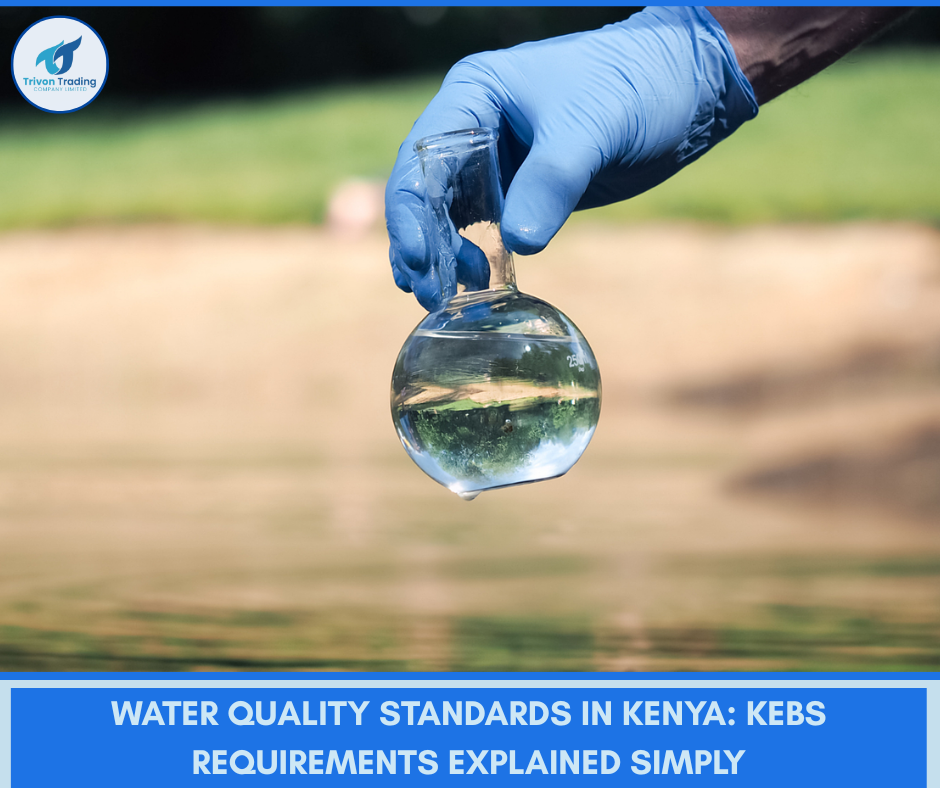
Water Quality Standards in Kenya: KEBS Requirements Explained Simply

Water Quality Standards in Kenya: KEBS Requirements Explained Simply Starting and running a successful water vending or bottled water business in Kenya requires more than just installing a purification machine and opening your doors. One of the most important pillars of long-term success is compliance with national water quality standards. :highlight In this detailed guide, we explain Kenya Bureau of Standards (KEBS) requirements in simple terms, what they mean for your water business, and how to ensure your purification system meets regulatory expectations. We will also show how working with a professional supplier like Trivon Trading helps you install compliant, high-performance purification systems from day one. What Is KEBS and Why Does It Matter? The Kenya Bureau of Standards (KEBS) is the government body responsible for developing and enforcing quality standards in Kenya. For water businesses, KEBS ensures that: Drinking water is safe for human consumption Bottled water meets labeling requirements Purification systems produce acceptable water quality Public health risks are minimized If you are producing or selling purified water, you must comply with KEBS standards before full operation. Understanding Water Quality Standards in Kenya KEBS provides detailed guidelines on: Physical parameters Chemical parameters Microbiological safety Packaging & labeling Processing requirements Let’s break them down in simple language. 1. Physical Water Quality Requirements Physical parameters affect how water looks, smells, and tastes. Key Physical Standards Include: Color: Water must be clear Odor: No unpleasant smell Taste: Neutral, no metallic or chemical taste Turbidity: Very low (clear water with no particles) If your water appears cloudy or has a strange taste, it automatically raises red flags during inspection. How to Meet Physical Standards Using proper filtration systems such as: Ultra Filtration (UF) Machines Reverse Osmosis Machines Ensures suspended particles, sediments, and visible impurities are removed. Trivon Trading provides complete purification systems designed to meet clarity and turbidity requirements. 2. Chemical Water Quality Requirements Chemical standards ensure that harmful substances are not present in unsafe amounts. Common Chemical Parameters KEBS Tests: Total Dissolved Solids (TDS) pH levels Fluoride levels Nitrates Heavy metals (lead, arsenic, etc.) Chlorides Sulphates Why This Matters High TDS water can: Taste salty or metallic Damage equipment Fail KEBS inspection Incorrect pH levels can: Corrode storage tanks Affect taste Indicate contamination How to Control Chemical Parameters For borehole water or high mineral content water, you need: Pre-filtration systems Activated carbon filters Properly sized Reverse Osmosis Machines RO systems remove dissolved salts and heavy metals effectively. Trivon Trading assists in testing your source water before recommending the right purification setup. 3. Microbiological Requirements (The Most Critical) This is the area where most businesses fail. KEBS requires that drinking water must have: Zero E. coli Zero fecal coliform No harmful bacteria No disease-causing microorganisms Microbiological contamination can lead to: Typhoid Cholera Diarrheal diseases Business closure How to Eliminate Bacteria To meet microbiological standards, your system should include: UV sterilization Ozone treatment (optional) Proper bottle rinsing systems Hygienic storage tanks For bottle hygiene, consider equipment like: Single Bowl (Jet-Type) Bottle Rinser For filling and sterilization support: 6 Taps Manual Filling Line These systems improve sanitation and reduce contamination risk. 4. KEBS Licensing & Certification Process (Simplified) Here’s what typically happens: Step 1: Application You apply for KEBS certification under bottled or packaged drinking water. Step 2: Inspection KEBS officers inspect: Premises layout Equipment quality Hygiene standards Water source Storage Step 3: Water Testing Samples are taken to laboratories for: Chemical analysis Microbiological testing Step 4: Approval If compliant, you receive certification. If not, you must correct issues before approval. Working with an experienced supplier like Trivon Trading increases your approval chances because your equipment meets industry standards. 5. Packaging and Labeling Requirements If you sell bottled water (5L, 10L, 20L, etc.), KEBS requires: Manufacturer name Physical address KEBS standardization mark (after approval) Batch number Manufacturing date Expiry date Net volume Improper labeling can result in fines or product recalls. 6. Facility Requirements KEBS also evaluates your shop layout. Your premises should have: Clean tiled floors Proper drainage Adequate lighting Separate washing and filling areas Food-grade storage tanks Equipment such as stainless steel batch tanks and pure water skids from Trivon Trading supports hygienic operations. 7. Common KEBS Compliance Mistakes Many water entrepreneurs fail inspection due to: ❌ Using domestic RO machines for commercial production ❌ No UV sterilization ❌ Poor bottle rinsing ❌ Lack of documented water testing ❌ Improper drainage ❌ Using non-food-grade tanks Avoiding these mistakes saves time and money. Why Proper Equipment Is the Foundation of Compliance Compliance is not about paperwork only—it is about system design. To consistently meet KEBS standards, your purification process must include: Raw water tank Sediment filtration Carbon filtration Softening (if required) RO or UF purification UV sterilization Hygienic storage Clean bottle rinsing Accurate filling Trivon Trading supplies integrated systems that combine these stages efficiently. Domestic vs Commercial Systems (A Critical Distinction) Many entrepreneurs attempt to start with: Domestic RO Machines These are designed for household use, not commercial production. Commercial compliance requires: Higher flow rate Industrial membranes Durable pumps Stainless steel components Reliable flow meters Using domestic systems in a water shop often leads to KEBS rejection. Ongoing Compliance: It Doesn’t Stop After Approval Getting certified is not the end. You must: Maintain regular water testing Replace filters on schedule Keep hygiene records Maintain equipment Failing to maintain standards can result in license suspension. A supplier like Trivon Trading provides maintenance support and spare parts to ensure continuous compliance. How Water Quality Impacts Your Brand Even beyond KEBS requirements, quality affects: Customer retention Word-of-mouth marketing Institutional contracts Bulk supply agreements Schools, offices, hospitals, and hotels require proof of quality compliance before signing supply contracts. High-quality purification systems give you a competitive advantage. Simplified Checklist for KEBS Compliance Before inviting inspectors, ensure: ✔ Water tested and documented ✔ Proper commercial purification system installed ✔ UV sterilization functional ✔ Bottle rinsing system installed ✔ Clean tiled floors and drainage ✔ Food-grade storage tanks ✔ Accurate labeling ✔ Maintenance records available If unsure, consult Trivon Trading for professional guidance. Final Thoughts Water quality compliance is not a burden—it is protection for your customers and your business. Understanding KEBS requirements simply means focusing on: Safe water Proper equipment Clean operations Continuous monitoring When you build your water business on a strong compliance foundation, you gain: Trust Stability Long-term profitability If you are planning to start or upgrade your water vending or bottling business, choose high-quality purification systems from Trivon Trading to ensure your water consistently meets KEBS standards.

Starting and running a successful water vending or bottled water business in Kenya requires more than just installing a purification machine and opening your doors. One of the most important pillars of long-term success is compliance with national water quality standards.

: highlight

In this detailed guide, we explain Kenya Bureau of Standards (KEBS) requirements in simple terms, what they mean for your water business, and how to ensure your purification system meets regulatory expectations.

We will also show how working with a professional supplier like Trivon Trading helps you install compliant, high-performance purification systems from day one.

What Is KEBS and Why Does It Matter?

The Kenya Bureau of Standards (KEBS) is the government body responsible for developing and enforcing quality standards in Kenya.

For water businesses, KEBS ensures that:

  • Drinking water is safe for human consumption
  • Bottled water meets labeling requirements
  • Purification systems produce acceptable water quality
  • Public health risks are minimized

If you are producing or selling purified water, you must comply with KEBS standards before full operation.

Understanding Water Quality Standards in Kenya

KEBS provides detailed guidelines on:

  • Physical parameters
  • Chemical parameters
  • Microbiological safety
  • Packaging & labeling
  • Processing requirements

Let’s break them down in simple language.

1. Physical Water Quality Requirements

Physical parameters affect how water looks, smells, and tastes.

Key Physical Standards Include:

  • Color: Water must be clear
  • Odor: No unpleasant smell
  • Taste: Neutral, no metallic or chemical taste
  • Turbidity: Very low (clear water with no particles).
  • If your water appears cloudy or has a strange taste, it automatically raises red flags during inspection.

How to Meet Physical Standards

Using proper filtration systems such as:

  • Ultra Filtration (UF) Machines
  • Reverse Osmosis Machines

Ensures suspended particles, sediments, and visible impurities are removed.

Trivon Trading provides complete purification systems designed to meet clarity and turbidity requirements.

2. Chemical Water Quality Requirements

Chemical standards ensure that harmful substances are not present in unsafe amounts.

Common Chemical Parameters KEBS Tests:

  • Total Dissolved Solids (TDS)
  • pH levels
  • Fluoride levels
  • Nitrates
  • Heavy metals (lead, arsenic, etc.)
  • Chlorides
  • Sulphates

Why This Matters

High TDS water can:

  • Taste salty or metallic
  • Damage equipment
  • Fail KEBS inspection
  • Incorrect pH levels can:
  • Corroded storage tanks
  • Affect taste
  • Indicate contamination

How to Control Chemical Parameters

For borehole water or high mineral content water, you need:

  • Pre-filtration systems
  • Activated carbon filters
  • Properly sized Reverse Osmosis Machines
  • RO systems remove dissolved salts and heavy metals effectively.
  • Trivon Trading assists in testing your source water before recommending the right purification setup.

3. Microbiological Requirements (The Most Critical)

This is the area where most businesses fail.

KEBS requires that drinking water must have:

  • Zero E. coli
  • Zero fecal coliform
  • No harmful bacteria
  • No disease-causing microorganisms

Microbiological contamination can lead to:

  • Typhoid
  • Cholera
  • Diarrheal diseases
  • Business closure

How to Eliminate Bacteria

To meet microbiological standards, your system should include:

  • UV sterilization
  • Ozone treatment (optional)
  • Proper bottle rinsing systems
  • Hygienic storage tanks

For bottle hygiene, consider equipment like:

  • Single Bowl (Jet-Type) Bottle Rinser
  • For filling and sterilization support:
  • 6 Taps Manual Filling Line
  • These systems improve sanitation and reduce contamination risk.

4. KEBS Licensing & Certification Process (Simplified)

Here’s what typically happens:

Step 1: Application

You apply for KEBS certification under bottled or packaged drinking water.

Step 2: Inspection

KEBS officers inspect:

Premises layout

Equipment quality

Hygiene standards

Water source

Storage

Step 3: Water Testing

Samples are taken to laboratories for:

Chemical analysis

Microbiological testing

Step 4: Approval

If compliant, you receive certification.

If not, you must correct issues before approval.

Working with an experienced supplier like Trivon Trading increases your approval chances because your equipment meets industry standards.

5. Packaging and Labeling Requirements

If you sell bottled water (5L, 10L, 20L, etc.), KEBS requires:

  • Manufacturer name
  • Physical address
  • KEBS standardization mark (after approval)
  • Batch number
  • Manufacturing date
  • Expiry date
  • Net volume

Improper labeling can result in fines or product recalls.

6. Facility Requirements

KEBS also evaluates your shop layout.

Your premises should have:

  • Clean tiled floors
  • Proper drainage
  • Adequate lighting
  • Separate washing and filling areas
  • Food-grade storage tanks

Equipment such as stainless steel batch tanks and pure water skids from Trivon Trading supports hygienic operations.

7. Common KEBS Compliance Mistakes

Many water entrepreneurs fail inspection due to:

❌ Using domestic RO machines for commercial production
❌ No UV sterilization
❌ Poor bottle rinsing
❌ Lack of documented water testing
❌ Improper drainage
❌ Using non-food-grade tanks

Avoiding these mistakes saves time and money.

Why Proper Equipment Is the Foundation of Compliance

Compliance is not about paperwork only—it is about system design.

To consistently meet KEBS standards, your purification process must include:

  • Raw water tank
  • Sediment filtration
  • Carbon filtration
  • Softening (if required)
  • RO or UF purification
  • UV sterilization
  • Hygienic storage
  • Clean bottle rinsing
  • Accurate filling

Trivon Trading supplies integrated systems that combine these stages efficiently.

Domestic vs Commercial Systems (A Critical Distinction)

Many entrepreneurs attempt to start with:

Domestic RO Machines

These are designed for household use, not commercial production.

Commercial compliance requires:

Higher flow rate

Industrial membranes

Durable pumps

Stainless steel components

Reliable flow meters

Using domestic systems in a water shop often leads to KEBS rejection.

Ongoing Compliance: It Doesn’t Stop After Approval

Getting certified is not the end.

You must:

Maintain regular water testing

Replace filters on schedule

Keep hygiene records

Maintain equipment

Failing to maintain standards can result in license suspension.

A supplier like Trivon Trading provides maintenance support and spare parts to ensure continuous compliance.

How Water Quality Impacts Your Brand

Even beyond KEBS requirements, quality affects:

Customer retention

Word-of-mouth marketing

Institutional contracts

Bulk supply agreements

Schools, offices, hospitals, and hotels require proof of quality compliance before signing supply contracts.

High-quality purification systems give you a competitive advantage.

Simplified Checklist for KEBS Compliance

Before inviting inspectors, ensure:

✔ Water tested and documented
✔ Proper commercial purification system installed
✔ UV sterilization functional
✔ Bottle rinsing system installed
✔ Clean tiled floors and drainage
✔ Food-grade storage tanks
✔ Accurate labeling
✔ Maintenance records available

If unsure, consult Trivon Trading for professional guidance.

Final Thoughts

Water quality compliance is not a burden—it is protection for your customers and your business.

Understanding KEBS requirements simply means focusing on:

Safe water

Proper equipment

Clean operations

Continuous monitoring

When you build your water business on a strong compliance foundation, you gain:

Trust

Stability

Long-term profitability

If you are planning to start or upgrade your water vending or bottling business, choose high-quality purification systems from Trivon Trading to ensure your water consistently meets KEBS standards.